
A Pool of Candidates Who Refuse to Swim: The 2016 Presidential Election and the Demise of Testing the Waters
Emily M. Hoyle 85 Geo. Wash. L. Rev. 312 In the 2016 presidential election, many candidates delayed announcing their candidacy until long after anyone who was paying attention realized that they were considering a run for office. In the past, these candidates may have been considered to be “testing the waters,” a special status proscribed... Read More
Concealed Carry Through Common Use: Extending Heller’s Constitutional Construction
Nicholas Griepsma 85 Geo. Wash. L. Rev. 284 Since the Supreme Court decided District of Columbia v. Heller in 2008, federal courts have disagreed about (1) the proper standard of review for Second Amendment questions, and (2) whether the Amendment confers a constitutional right to concealed carry a firearm in public. The same “common use”... Read More
You Have Not Because You Ask Not: Why Federal Courts Do Not Certify Questions of State Law to State Courts
Frank Chang 85 Geo. Wash. L. Rev. 251 While exercising diversity or supplemental jurisdiction, federal courts often confront cases where the applicable state law is unclear. Certification procedures provide federal courts with the ability to ascertain the meaning of unclear state law by asking the state supreme court. Despite these procedures, federal courts generally will... Read More
Preemption Deals: Response to Robert Mikos
Aziz Z. Huq 85 Geo. Wash. L. Rev. 226 This Response analyzes the dynamics of federal-state bargaining in the preemption domain in the context of both Congress and federal agencies. It develops both the argument for intergovernmental bargaining, and considers how the circumstances of negotiation and other factors might impede salutary results. Turning to Professor... Read More
Credibility by Proxy
Julia Simon-Kerr 85 Geo. Wash. L. Rev. 152 Evidence jurisprudence assumes that impeachment rules are intended to help determine the truth of the matter by identifying liars. For example, a witness’s credibility can be impeached with evidence that she has a fraud conviction because in theory that conviction suggests she is deceitful and is therefore... Read More
“Substantial” Burdens: How Courts May (and Why They Must) Judge Burdens on Religion Under RFRA
Frederick Mark Gedicks 85 Geo. Wash. L. Rev. 94 The Religious Freedom Restoration Act (“RFRA”) excuses believers from federal laws that “substantially burden” their religious exercise, unless the government shows that the law furthers a compelling interest in the least restrictive manner. Who decides if a burden is “substantial”? RFRA claimants argue that they do.... Read More
The Inefficient Evolution of Merger Agreements
Robert Anderson and Jeffrey Manns 85 Geo. Wash. L. Rev. 57 Transactional law is one of the most economically significant areas of legal practice and accounts for a large percentage of the profits and staffing at most elite law firms. But in spite of its economic importance, there has been little empirical work on the... Read More
Making Preemption Less Palatable: State Poison Pill Legislation
Robert A. Mikos 85 Geo. Wash. L. Rev. 1 Congressional preemption constitutes perhaps the single greatest threat to state power and to the values served thereby. Given the structural incentives now in place, there is little to deter Congress from preempting state law, even when the state interests Congress displaces far exceed its own. The... Read More
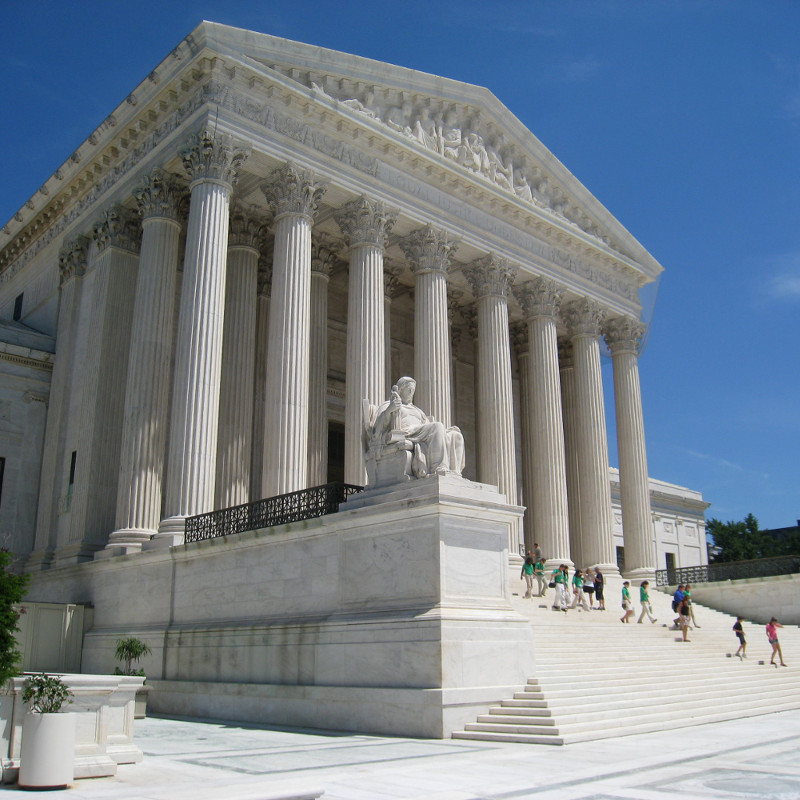
On the Docket’s Preview of January Supreme Court Arguments
The New Year may finally bring some excitement to Court-watchers dissatisfied with the Eight-Justice Supreme Court’s perceived recent avoidance of hot-button controversies. Though the ever-present specter of potential deadlock remains, the Court in January will hear arguments in several high-profile cases that are sure to garner passionate responses from individuals of all political stripes. In some... Read More
The Dangers of Misinterpreting Recently Amended FRE 801(d)(1)(B)
Professor Laird C. Kirkpatrick and Professor Christopher B. Mueller · December 2016 84 Geo. Wash. L. Rev. Arguendo 193 A recent amendment to Federal Rule of Evidence 801(D)(1)(B) expands the situations in which prior consistent statements by testifying witnesses can be used as substantive evidence, and not merely as rehabilitating evidence. In this piece, the... Read More