

Lewis v. Clarke: Good Losses and Bad Losses
May 9, 2017 Lewis v. Clarke, 581 U.S. ___ (2017) (Sotomayor, J.). Response by Ezra Rosser Geo. Wash. L. Rev. On the Docket (Oct. Term 2016) Slip Opinion | Washington Post | SCOTUSblog Lewis v. Clarke: Good Losses and Bad Losses Lewis v. Clarke1 involves a run-of-the-mill car accident: a Mohegan Tribal Gaming Authority limousine rear-ended another... Read More
On the Docket’s Preview of April Supreme Court Arguments
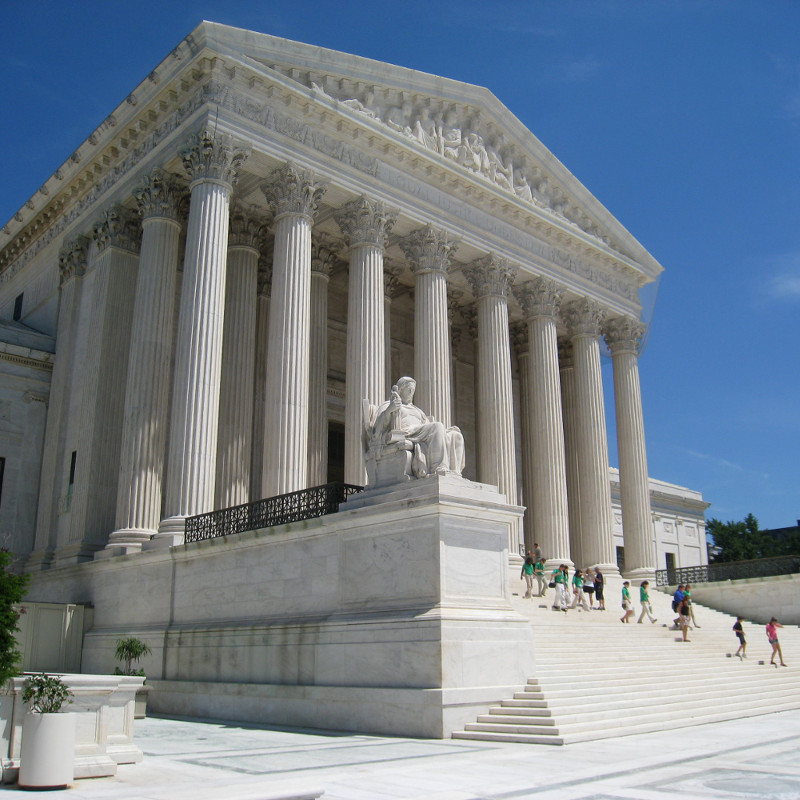
After more than a year as an eight member body, the Supreme Court finally has a new Associate Justice. President Trump’s nominee, Neil Gorsuch, will officially take his seat on the bench this Monday to hear arguments in three cases: Perry v. Merit Systems Protection Board, dealing with the proper venue for an appeal of an... Read More

Moore v. Texas: The Supreme Court Limits State Discretion to Make the “Protection of Human Dignity” a Reality for the Intellectually Disabled
April 9, 2017 Moore v. Texas, 581 U.S. ___ (2017) (Ginsburg, J.). Response by Robin M. Maher Geo. Wash. L. Rev. On the Docket (Oct. Term 2016) Slip Opinion | New York Times | SCOTUSblog Moore v. Texas: The Supreme Court Limits State Discretion to Make the “Protection of Human Dignity” a Reality for the Intellectually Disabled... Read More

Endrew F. v. Douglas County School District: Recognizing that Merely More than De Minimis is Not Appropriate for Special Education
April 9, 2017 Endrew F. v. Douglas County School District, 580 U.S. ___ (2017) (Roberts, J.). Response by Shannon Rohn Geo. Wash. L. Rev. On the Docket (Oct. Term 2016) Slip Opinion | NPR | SCOTUSblog Endrew F. v. Douglas County School District: Recognizing that Merely More than De Minimis is Not Appropriate for Special Education On... Read More
Alumni Newsletter – Volume 85, Spring Edition
Amy Pearlman, Volume 85 Editor-in-Chief, has crafted this newsletter to keep our alumni apprised of some of the great things our students did during her tenure. Amy documents our successful symposium, our work with On the Docket, and the impressive accomplishments of our students both in and out of the classroom. Read the full newsletter here.
Structured Lingchi: Czyzewski v. Jevic Holding Corp.
April 3, 2017 Czyzewski v. Jevic Holding Corp., 580 U.S. ___ (2017) (Breyer, J.). Response by Professor Bruce Markell Geo. Wash. L. Rev. On the Docket (Oct. Term 2016) Slip Opinion | Law360 | SCOTUSblog Structured Lingchi: Czyzewski v. Jevic Holding Corp. On March 23, 2017, the Supreme Court decided Czyzewski v. Jevic Holding Corp.1 (“Jevic“). Jevic... Read More
Knocked Unconscionable: College Football Scholarships and Traumatic Brain Injury
Bryant Lee 85 Geo. Wash. L. Rev. 613 Each year, thousands of athletes play college football and are at risk of incurring a traumatic brain injury (“TBI”). TBI can take many forms including concussion, Second-Impact Syndrome, Chronic Traumatic Encephalopathy (“CTE”), early-onset Alzheimer’s, dementia, and other brain conditions. These injuries, which many experts believe can be... Read More
Game of Phones, Data Isn’t Coming: Modern Mobile Operating System Encryption and Its Chilling Effect on Law Enforcement
Kristen M. Jacobsen 85 Geo. Wash. L. Rev. 566 The encrypted smartphone presents a novel legal issue that is hard to crack. Smartphone data is essential to investigating and prosecuting a range of crimes, such as murder, human trafficking, child pornography, and terrorism. However, Apple and Google’s recently reengineered mobile operating systems threaten to lock... Read More
Losing Your Children: The Failure to Extend Civil Rights Protections to Transgender Parents
Charles Cohen 85 Geo. Wash. L. Rev. 536 No widely accepted legal rule governs how courts adjudicate claims made by transgender parents for custody of, and visitation with, their children. The result is a patchwork of rules, none of which guarantees these parents nondiscriminatory consideration of their claims for custody and visitation. To correct this... Read More
Agencies as Legislators: An Empirical Study of the Role of Agencies in the Legislative Process
Jarrod Shobe 85 Geo. Wash. L. Rev. 451 The scope and power of the administrative state in implementing law is a common theme in academic discussions and judicial decisions, but the role that agencies play in drafting the laws that they implement has gone mostly unexplored. Based on interviews with fifty-four agency staff who work... Read More