
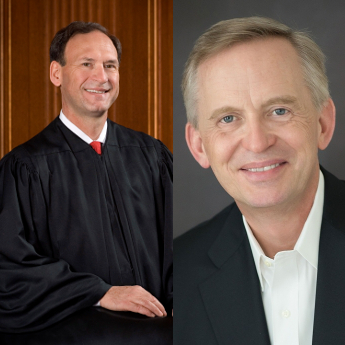
Salman v. United States: Stock Tips Make Bad Holiday Gifts
Salman v. United States, 580 U.S. ___ (2016) (Alito, J.). Response by Professor Randall D. Eliason Geo. Wash. L. Rev. On the Docket (Oct. Term 2016) Slip Opinion | New York Times DealBook | SCOTUSblog Stock Tips Make Bad Holiday Gifts Insider trading is a particularly murky area of criminal law. Because no statute defines the... Read More
When a Picture Is Not Worth a Thousand Words
Andreas Kuersten · November 2016 84 Geo. Wash. L. Rev. Arguendo 179 It is frequently put forth that the admission of neuroimaging evidence at criminal trials introduces the substantial risk of these sophisticated and visual presentations unduly influencing factfinders. As such, this Essay analyzes how brain image evidence might have this effect. Particularly, it focuses... Read More
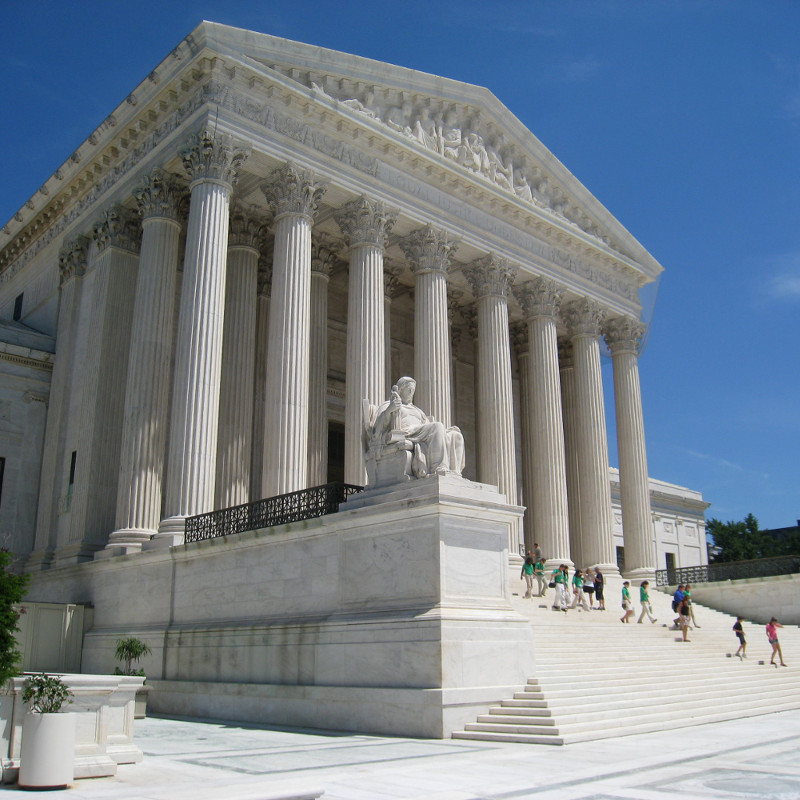
On the Docket’s Preview of December Supreme Court Arguments
As the Supreme Court nears double digit months without a ninth Justice, the end may be in sight. Now that the election is over and President-elect Trump is beginning to fill his soon-to-be cabinet positions, judicial nomination buzz is warming up, and attention will be turning from the Senate’s blockage of Judge Merrick Garland’s nomination... Read More
Panel 4: Consumer Contract Law
Panel 4: Consumer Contract Law Our final panel assessed the future of consumer contract law in the United States, the United Kingdom, and the European Union. The Honorable Carlos Lucero, Judge on the U.S. Court of Appeals for the Tenth Circuit moderated the discussion featuring Professors Geraint Howells, City University of Hong Kong, and James... Read More
Panel 3: Contract Interpretation and Good Faith
Panel 3: Contract Interpretation and Good Faith The George Washington University Law School’s Dean Blake Morant began the third panel, “Contract Interpretation and Good Faith” by introducing and welcoming Martin Hogg, Professor of the Law of Obligations from Edinburgh Law School; Robert Stevens, Herbert Smith Freehills Professor of English Private Law from the University of... Read More
Panel 2: Contractual Remedies
Panel 2: Contractual Remedies Professor Martin Hogg, co-host of the Symposium and Professor of the Law of Obligations at Edinburgh Law School, introduced our esteemed panelists and moderated the second panel’s robust discussion of contractual remedies. Chen-Wishart, Professor of the Law of Contract and Associate Dean of Graduates at Oxford University, kicked off the conversation. ... Read More
Panel 1: Share Economy and the Edges of Contract Law
Panel 1: Share Economy and the Edges of Contract Law The first panel of The George Washington Law Review Symposium was titled “Share Economy and the Edges of Contract Law.” The panel addressed how the new sharing economy has tested (and continues to test) the bounds of contract law. The panel approached this issue from... Read More
Keynote Address by the Right Honorable Lord Patrick Hodge
Keynote Address by the Right Honorable Lord Patrick Hodge On November 19, 2016, the Right Honorable Lord Patrick Hodge delivered the Keynote Address at The George Washington Law Review’s Symposium, Divergence and Reform in the Common Law of Contracts. Lord Hodge, Justice of the Supreme Court of the United Kingdom, framed his remarks around the... Read More
The Failure of the Computer Fraud and Abuse Act: Time to Take an Administrative Approach to Regulating Computer Crime
Ric Simmons 84 Geo. Wash. L. Rev. 1703 Whenever a legislature creates a technology-specific crime, it faces a number of challenges. First, there is a risk that the new statute will merely duplicate existing crimes, thus over criminalizing the conduct and creating unnecessary confusion. Second, the legislature needs to ensure that it provides the proper... Read More
Regulating Software When Everything Has Software
Paul Ohm and Blake Reid 84 Geo. Wash. L. Rev. 1672 This Article identifies a profound, ongoing shift in the modern administrative state: from the regulation of things to the regulation of code. This shift has and will continue to place previously isolated agencies in an increasing state of overlap, raising the likelihood of inconsistent... Read More