
Doctrine, Discretion, and Discrimination: A Response to Professor Richardson
Professor Gabriel J. Chin 83 Geo. Wash. L. Rev.1023 Professor Richardson has presented a characteristically insightful and gracious analysis of the critique of Whren v. United States offered in the Article I co-authored with Charles Vernon. She, like us, would like to see Whren overruled. She believes, however, that our solution has not gone far... Read More
A Comprehensive Approach to Stateless Income
Andrew Fischer 83 Geo. Wash. L. Rev. 1028 Multinational corporations are drastically reducing their tax burdens through aggressive tax structuring. These tax savings are largely realized through the creation of stateless income, which is income that is taxed in a jurisdiction other than where a corporation is domiciled or where it conducts its business operations.... Read More
“Yes We Scan”: Using SEC Disclosures to Compel and Standardize Tech Companies’ Reports on Government Requests for User Data
Ana M. Gonzalez 83 Geo. Wash. L. Rev. 1058 The recent Snowden leaks have ignited fiery debates over government requests for private user information and tech companies’ complicit role in bulk data collection. Some information and communications technology firms have urged government to reform its surveillance practices for private user data. Many others, however, remain... Read More
Enhancing Responsiveness and Alleviating Gridlock: Pragmatic Steps to Balance Campaign Finance Law in Light of the Supreme Court’s Jurisprudence
Paul J. Weeks 83 Geo. Wash. L. Rev. 1097 Over forty years ago, Congress first enacted a comprehensive scheme to regulate money in federal elections. This scheme included disclosure requirements and tight monetary limitations on the various political actors who sought to influence elections. The Supreme Court’s initial response to the comprehensive scheme upheld the... Read More
Comment on King v. Burwell
Comment by Sean Ross Callaghan Practitioner; Student | George Washington University Law | Pending Bar Admission into PA & DC Read the Original Response by Professor Pierce Here I agree with Professor Pierce that the Court’s application of the Plain Meaning Rule in King v. Burwell is “highly contestable.” Congress has—and should have—the exclusive power... Read More
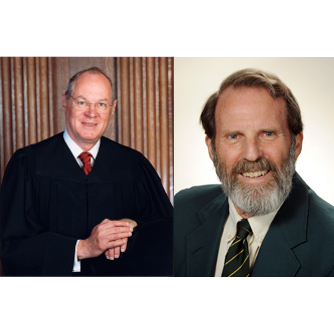
Obergefell v. Hodges
Response by Professor Alan B. Morrison Geo. Wash. L. Rev. Docket (Oct. Term 2014) Obergefell v. Hodges, 575 U.S. ___ (2015). Docket No. 14-556; argued April 28, 2015; June 26, 2015 Slip Opinion | New York Times | SCOTUSblog See End of Post for Reader Comment With all that was written before and after the Supreme... Read More
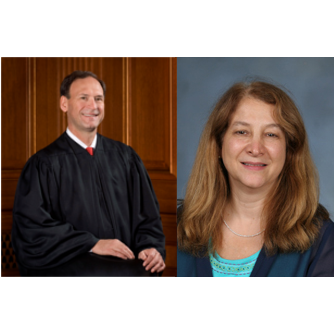
Glossip v. Gross
Response by Dean Phyllis Goldfarb Geo. Wash. L. Rev. Docket (Oct. Term 2014) Glossip v. Gross, 575 U.S. ___ (2015). Docket No. 14-7955; April 29, 2015; June 29, 2015 Slip Opinion | New York Times | SCOTUSblog Gross Imagery: Fracturing Legally Over Injecting Lethally With so many 5-4 rulings on fundamental issues... Read More
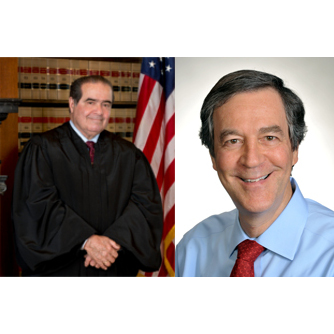
Michigan v. Environmental Protection Agency
Response by Professor Robert L. Glicksman Geo. Wash. L. Rev. Docket (Oct. Term 2014) Michigan v. Environmental Protection Agency, 575 U.S. ___ (2015). Docket Nos. 14-46, 14-47, and 14-49; argued March 25, 2015; decided June 29, 2015 Slip Opinion | New York Times | SCOTUSblog In Michigan v. Environmental Protection Agency,1 Justice Scalia, for a... Read More

King v. Burwell
Response by Professor Richard J. Pierce, Jr. Geo. Wash. L. Rev. Docket (Oct. Term 2014) King v. Burwell, 575 U.S. ___ (2015). Docket No. 14-114; March 4, 2015; June 25, 2015 Slip Opinion | New York Times | SCOTUSblog In King v. Burwell, a six-Justice majority held that The Patient Protection and Affordable Care Act... Read More
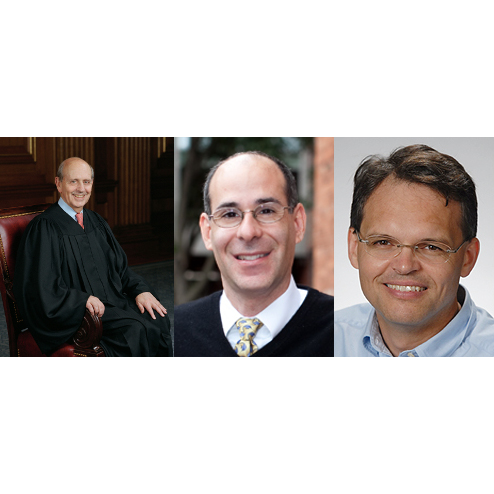
Walker v. Texas Division, Sons of Confederate Veterans, Inc.
Response by Professors Peter J. Smith & Robert W. Tuttle Geo. Wash. L. Rev. Docket (Oct. Term 2014) Walker v Texas Division, Sons of Confederate Veterans, Inc., 575 U.S. ___ (2015). Docket No. 14-144; argued March 23, 2015; June 18, 2015 Slip Opinion | New York Times | SCOTUSblog In Walker v. Texas Division, Sons... Read More