

Epic Systems Corp. v. Lewis: Class Action Waivers—Employees Predictably Lose
June 6, 2018 Epic Systems Corp. v. Lewis, 584 U.S. ___ (2018) (Gorsuch, J.). Response by Michael Selmi Geo. Wash. L. Rev. On the Docket (Oct. Term 2017) Slip Opinion | SCOTUSblog Epic Systems Corp. v. Lewis: Class Action Waivers—Employees Predictably Lose It came as no surprise when the Supreme Court, in a 5–4 decision, upheld... Read More
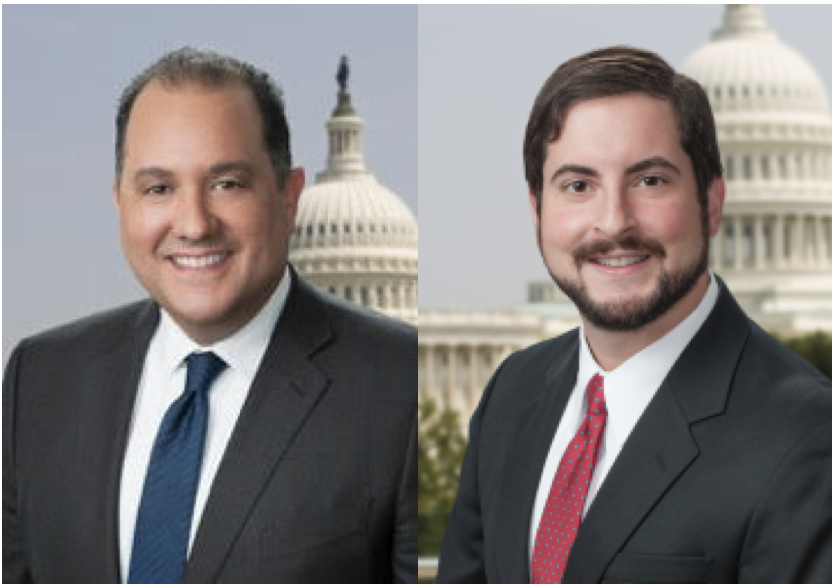
Murphy v. NCAA: New Jersey Wins Big After Betting on Unconstitutionality of Federal Sports-Betting Ban
May 30, 2018 Murphy v. NCAA, 584 U.S. ___ (2018) (Alito, J.). Response by Jeff Ifrah & David Yellin Geo. Wash. L. Rev. On the Docket (Oct. Term 2017) Slip Opinion | New York Times | SCOTUSblog Murphy v. NCAA: New Jersey Wins Big After Betting on Unconstitutionality of Federal Sports-Betting Ban In a recent 6–3... Read More

McCoy v. Louisiana: New Challenges for Defenders, New Risks for the Mentally Ill
May. 23, 2018 McCoy v. Louisiana, 584 U.S. ___ (2018) (Ginsburg, J.). Response by Robin M. Maher Geo. Wash. L. Rev. On the Docket (Oct. Term 2017) Slip Opinion | SCOTUSblog McCoy v. Louisiana: New Challenges for Defenders, New Risks for the Mentally Ill In Florida v. Nixon,1 Justice Ginsburg wrote for a unanimous Supreme... Read More

SAS Institute Inc. v. Iancu: The Statute is Hereby Clear
May 7, 2018 SAS Institute Inc. v. Iancu, 584 U.S. ___ (2018) (Gorsuch, J.). Response by Andrew C. Michaels Geo. Wash. L. Rev. On the Docket (Oct. Term 2017) Slip Opinion | SCOTUSblog SAS Institute Inc. v. Iancu: The Statute is Hereby Clear Before the Law stands a doorkeeper . . . . From hall to hall there is... Read More

Sessions v. Dimaya: Refusing to Leave “judges to their intuitions and the people to their fate,” Gorsuch Positions Himself as Scalia’s Jurisprudential Heir in Deportation Case
Apr. 27, 2018 Sessions v. Dimaya, 584 U.S. ___ (2018) (Kagan, J.). Response by Cori Alonso-Yoder Geo. Wash. L. Rev. On the Docket (Oct. Term 2017) Slip Opinion | SCOTUSblog Sessions v. Dimaya: Refusing to Leave “judges to their intuitions and the people to their fate,” Gorsuch Positions Himself as Scalia’s Jurisprudential Heir in Deportation Case On... Read More
Standing Up for the Dead Inventor: Ensuring a Personal Representative’s Standing to Sue for Patent Infringement
Akkad Y. Moussa 86 Geo. Wash. L. Rev. 287 The patent system is the product of federal law, while the probate system is that of state law. As one can imagine, issues arise when these two interact—and, because statutes give patents the attributes of personal property, the twoinevitably do. One problem is an apparent void... Read More
As Justice So Requires: Making the Case for a Limited Reading of § 230 of the Communications Decency Act
Yaffa A. Meeran 86 Geo. Wash. L. Rev. 257 Section 230 of the Communications Decency Act was originally enacted to protect online providers from liability for exercising publishing functions over content posted by third parties on their websites. Since its enactment, courts have expanded the provision and conferred close to absolute immunity to online intermediaries... Read More
JASTA Say No: The Practical and Constitutional Deficiencies of the Justice Against Sponsors of Terrorism Act
Lisa Ann Johnson 86 Geo. Wash. L. Rev. 231 Congress passed the Justice Against Sponsors of Terrorism Act (“JASTA”) to create a new jurisdictional exception to foreign sovereign immunity where a plaintiff is able to prove that a foreign sovereign sponsored terrorism. Unfortunately for potential plaintiffs, this framework has both constitutional and practical flaws that... Read More
Taking Care of the Rule of Law
David S. Rubenstein 86 Geo. Wash. L. Rev. 168 The project of squaring the rule of law with executive governance is coming to a head. Hardly a week passes without commentators summoning the rule of law to pass judgment on the legitimacy or desirability of some executive action. But the more we talk about the... Read More
The Vanishing Criminal Jury Trial: From Trial Judges to Sentencing Judges
The Honorable Robert J. Conrad, Jr. & Katy L. Clements 86 Geo. Wash. L. Rev. 99 Federal criminal jury trials are dying. Surely, but not slowly. Within the ten-year span from 2006 to 2016, the absolute number of cases disposed of by jury trial declined by forty-seven percent. During the same ten-year span, the portion... Read More