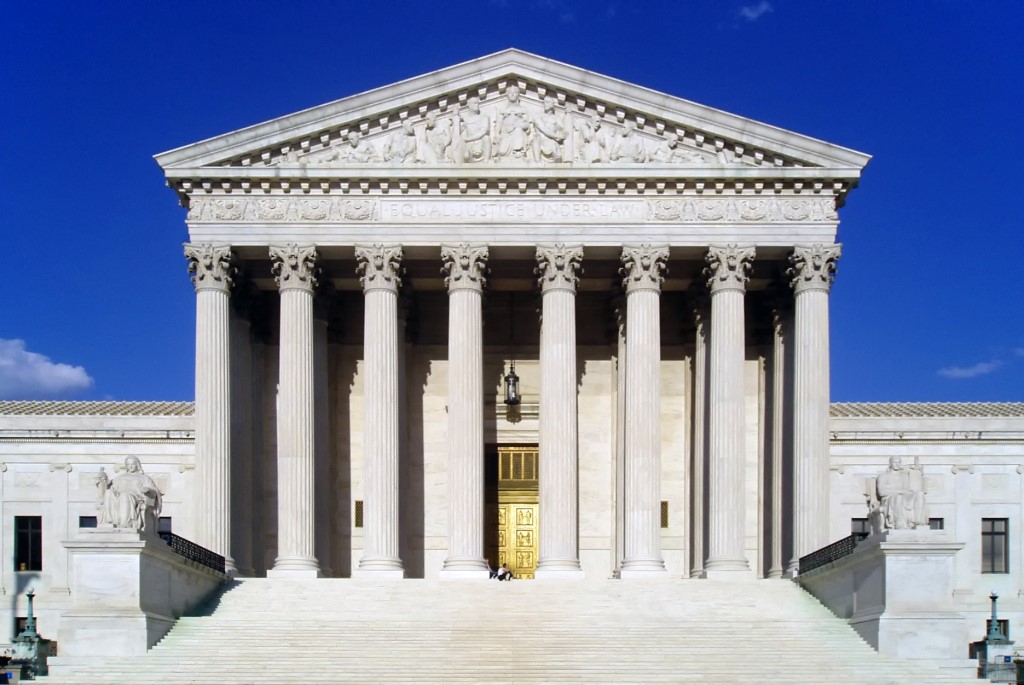
The Supreme Court’s 2026 October Term continues this month, as the Justices hear a range of consequential cases. This post previews the cases scheduled for argument during the November Sitting, covering issues ranging from statutory interpretation to the future of federal habeas corpus petitions. Stay tuned for additional case Previews and Responses as the Term progresses.
Table of Contents
Younge v. Fulton Judicial Circuit District Attorney’s Office, Georgia
No. 25-352, 11th Cir. (Argument Nov. 2, 2026)
Preview by Ozi Ghimire, Member
In Younge v. Fulton Jud. Cir. Dist. Att’y’s Off., Georgia, the Supreme Court will decide whether a defendant that fails to include an affirmative defense in its answer may nonetheless raise that defense as the basis for a summary judgment motion without first amending its answer, even when Federal Rule of Civil Procedure 16(b)(4) would bar the amendment.
Petitioner Jasmine Younge argues that allowing defendants to assert unpleaded affirmative defenses at summary judgment conflicts with several provisions of the Federal Rules of Civil Procedure and creates inconsistent requirements for when these defenses may be raised. See Brief for Petitioner at 6–9. Respondent, the Fulton Judicial Circuit District Attorney’s Office, counters that the Federal Rules permit a defendant to raise an unpleaded affirmative defense at summary judgment so long as the delay does not prejudice the plaintiff. See Brief for Respondent at 7, 15–16.
In July 2019, Younge told Fulton County District Attorney Paul Howard that she was pregnant. See Brief for Petitioner at 3–4. According to Younge’s complaint, Howard responded angrily, began reassigning her duties to other employees, and excluded her from meetings. Id. Two weeks after her announcement, he fired her. Id. Younge sued the District Attorney’s Office (“DA’s Office”) in 2020, alleging, among other claims, that she was fired because of her pregnancy, in violation of the Civil Rights Act of 1964. Id.
The DA’s Office filed a timely answer asserting several affirmative defenses. Id. at 4. In April 2021, the district court issued a Rule 16(b) scheduling order requiring any amendments to the pleadings to comply with the Local Rules; the scheduling order also set a May 2021 deadline for proposed amendments. Id. Discovery closed in January 2022. Id. Two months later, the DA’s Office announced that it would raise a new affirmative defense: Younge fell outside of Title VII’s coverage because, under 42 U.S.C. § 2000e(f), her responsibilities made her part of an elected official’s personal staff. Id. at 5. Rather than amending its answer, the DA’s Office moved for summary judgment on that basis. Id. After holding a hearing, the magistrate judge concluded that the personal-staff exemption was an affirmative defense that the Office had failed to plead. Brief for the Respondent at 5. The judge nevertheless found that the late assertion did not prejudice Younge, and recommended summary judgment for the DA’s Office after concluding that the exemption did apply. Id. at 5. The district court adopted the recommendation after de novo review. Id. at 7.
Younge appealed to the Eleventh Circuit, which affirmed the district court’s decision. Id. at 7. Applying its precedent, the Eleventh Circuit held that a district court may consider an unpleaded affirmative defense at summary judgment if the plaintiff suffers no prejudice. Id. The court also found that Younge was not prejudiced by the DA’s Office’s late assertion of the defense and held that there was no genuine dispute of material fact as to whether she was a member of the District Attorney’s personal staff. Id.
The Court will now consider whether a defendant that omits an affirmative defense from its answer must formally amend its pleading to satisfy Rule 16(b)(4)’s good-cause standard once a scheduling deadline has passed, or whether courts may consider the defense at summary judgment so long as the plaintiff is not prejudiced.
Maxwell v. Dinis
No. 25-5930, 5th Cir. (Argument Nov. 2, 2026)
Preview by Carter Vanderloo, Member
In 2015, William Maxwell was sentenced to twenty years in federal prison, a sentence he is currently serving. See Brief for the Petitioner at 9–10. In Maxwell v. Dinis, the Supreme Court will decide if he can use a writ of habeas corpus to seek early release to home confinement or to a halfway house under the First Step Act of 2018. Id. at i.
The First Step Act of 2018 allows federal inmates to earn time credits through participation in “recidivism-reduction programs and productive activities.” Id. at 9; 18 U.S.C. § 3632(d)(4)(A). Once earned, the credits “shall be applied toward time in prerelease custody or supervised release” and “[t]he Director . . . shall . . . transfer eligible prisoners . . . into prerelease custody or supervised release.” 18 U.S.C. § 3632(d)(4)(C). Mr. Maxwell alleges that the Bureau of Prisons did not properly apply his time credits and seeks to remedy the error under federal habeas law. See Brief for the Petitioner at 10.
The Fifth Circuit held that habeas was improper and that Mr. Maxwell should instead have alleged a federal civil rights violation under Bivens v. Six Unknown Named Agents of Federal Bureau of Narcotics, 403 U.S. 388 (1971). See Brief for the Petitioner at 11. The Court-appointed amicus curiae, appointed because neither party before it supports the lower court’s ruling, argues that Bivens is not the proper vehicle while defending the Fifth Circuit’s holding that Mr. Maxwell’s habeas claim fails. See Brief for the Court-Appointed Amicus Curiae in Support of the Judgment Below at 16–17, 41. This amicus argues that habeas cannot be used to challenge the conditions of confinement and that transfer to prerelease custody or a halfway house is a change in the conditions of confinement. See id. at 16–20.
In contrast, Mr. Maxwell argues, and the Government agrees, that habeas can be used to seek early transfer to a halfway house or home release because it challenges the level of confinement at the core of habeas. See Brief for the Petitioner at 34–35; Brief for the Respondent Supporting Vacatur at 35. The Court’s ruling on this question alone will be significant and could resolve an ongoing circuit split over whether habeas can challenge the conditions of detention. See, e.g., Wilborn v. Mansukhani, 795 F. App’x 157, 163–64 (4th Cir. 2019) (per curiam) (listing cases describing the circuit split).
The Government argues, however, that Mr. Maxwell’s habeas claim fails for other reasons. See Brief for the Respondent Supporting Vacatur at 35. First, it argues that Mr. Maxwell failed to exhaust his available administrative remedies. Id. Second, and of broader national significance, it argues that Congress barred suits of this nature through 18 U.S.C. § 3621(b), which prevents judicial review of the “designation of the place of imprisonment under this subsection.” Id. at 36; 18 U.S.C. § 3621(b). This issue was not argued below, and traditional practice would be for the Supreme Court to vacate and remand so the Fifth Circuit could consider this in the first instance. Id. at 40.
Maxwell v. Dinis presents two questions that could each reshape federal habeas practice: whether habeas reaches requests for transfer to prerelease custody, and whether § 3621(b) bars judicial review of those requests. The Court may resolve only the first and remand the second.
St. Mary Catholic Parish v. Roy
No. 25-581, 10th Cir. (Argument Nov. 3, 2026)
Preview by Aidan Keaveney, Managing Editor
This case considers whether the First Amendment protects preschools that discriminate against LGBTQ+ individuals and families.
Colorado’s Universal Preschool Program (“UPK”) provides citizens with preschool tuition assistance that can be used at any preschool that meets certain quality standards and does not discriminate on certain bases, including LGBTQ+ identity, in enrollment. Brief for Petitioners at 5–6. Preschools are permitted other enrollment preferences, however, such as for children of employees, siblings of current students, and—for schools offering specialized services to such children—disabled or low-income children. Id. at 7–8. Preschools may also apply for approval of new enrollment preferences and may ask for a temporary waiver of certain quality standards. Id. at 8–9.
Petitioners are Catholic preschools in Denver that deny admission to children from LGBTQ+ families because they interpret Catholic teachings to reject same-sex marriage and gender expansiveness. Id. at 11–14. The Colorado Department of Early Childhood (“Department”) denied Petitioners’ request for an exemption from the UPK antidiscrimination provision. Id. at 15. Petitioners challenged the denial in federal court and lost in both the district court and the Tenth Circuit. Id. at 15–17.
This case presents three major themes.
Religious Discrimination: The Free Exercise Clause prohibits the government denying public funding to religious entities solely because of their religious status or conduct. Petitioners argue that the Department has denied access to government funds because the Petitioners’ religious practice includes discrimination against LGBTQ+ families. Id.at 28–31. The Department rejects that characterization, arguing that both secular and religious preschools may participate in UPK as long as they comply with the antidiscrimination provision, or may decline to participate if compliance would violate their conscience. Brief on the Merits for Respondents at 27–28.
Comparable Exceptions: The Free Exercise Clause prohibits the government treating secular conduct more favorably than comparable religious conduct. Petitioners argue that preferences for low-income and disabled students discriminate against high-income and nondisabled students in a comparable way to discrimination against children from LGBTQ+ families. Brief for Petitioners at 36–43. As such, the Department has treated secular discrimination better than comparable religious discrimination. Id. The Department responds that these are not “comparable” exceptions because providing low-income and disabled students with specialized services does not deny equal opportunity to high-income and nondisabled students who do not want nor need those services. Brief on the Merits for the Respondents at 36–43.
Discretionary Exceptions: The Free Exercise Clause requires a government to grant requests for religious exemptions from a law if it offers individualized consideration of secular exemption requests. Petitioners here argue that the provisions allowing schools to apply for previously unrecognized preferences and for a temporary waiver of the quality standards provide for such individualized consideration, so the Department must grant a religious exception. Brief for Petitioners at 43–48. The Department responds that these provisions only allow statutorily permissible preferences and flexibility to almost-compliant schools. Brief on the Merits for the Respondents at 44–50.
This case asks whether the government must fund activities that break its own laws for religious purposes. If the Court’s recent pattern holds, the answer will be yes.
Guerrero v. Johnson
No. 25-1003, 5th Cir. (Argument Nov. 4, 2026)
Preview by Alexis Raleigh, Member
Guerrero v. Johnson turns on two words: “previously unavailable.” Brief for Petitioner at 16.
The Antiterrorism and Effective Death Penalty Act of 1996 (“AEDPA”) limits successive habeas petitions by state prisoners. Brief for Petitioner at 1. State prisoners are only allowed a second petition if the new claim “relies on a new rule of constitutional law . . . that was previously unavailable,” 28 U.S.C. § 2244(b)(2)(A), or asserts a new factual predicate showing that no reasonable factfinder would have found the applicant guilty, id. § 2244(b)(2)(B). Both parties agree that the Supreme Court’s 2002 decision in Atkins v. Virginia established a new rule of constitutional law by holding that executing intellectually disabled prisoners violates the Eighth Amendment. See Brief for Petitioner at 22; Respondent’s Brief at 1–2.
Respondent, Dexter Johnson, is a Texas death row inmate sentenced in 2007. Respondent’s Brief at 4. At his trial and in his first habeas petition, Johnson’s IQ scores automatically disqualified him from being classified as intellectually disabled. Id. at 4–5. In 2019—after a Supreme Court admonishment—Texas updated its medical standards to match the Diagnostic and Statistical Manual of Mental Disorders, 5th Edition (“DSM-5”), which redefined “intellectually disabled.” Id. at 3–7. Johnson was then retested and found intellectually disabled. Id. at 8–9. Soon after, he filed a subsequent habeas petition under 28 U.S.C. § 2244(b)(2)(A), claiming that Atkins was unavailable to him prior to Texas’s change in medical standards. Id. The Fifth Circuit authorized the petition, and after the district court held that Johnson satisfied AEDPA, the Fifth Circuit affirmed. Id. at 9–10.
Eric Guerrero, the Director of the Texas Department of Criminal Justice, appealed. Id. at 11. Guerrero argues that Atkins was “previously available” because it predated Johnson’s first petition. Brief for Petitioner at 14. He argues that the Fifth Circuit incorrectly focused on the availability of the claim, not the rule. Id. at 18. Guerrero contends that the DSM-5 change is a factual predicate governed by § 2244(b)(2)(B) only, and that treating it otherwise would blur AEDPA’s two exceptions. Id. at 23–24, 32. Because Johnson’s status does not bear on his guilt, Guerrero argues the petition was improper. Id. Lastly, he asserts that a second review would undermine Texas’s sovereign interests and AEDPA’s balance of federalism and comity. Id. at 37.
Johnson responds that the new medical standard was not a new factual predicate, but a new legal predicate that made Atkins’s constitutional rule available to him for the first time, since the rule must be usable, not merely existent, to be “available.” Respondent’s Brief at 13. He concedes his retesting created new facts—though he notes that factual support is required for any claim and that retesting without a change in medical standard would not permit a second petition. Id. at 19–20. Barring his claim, which is based on a new legal standard, he articulates, would require inmates to make meritless arguments in their initial petitions, a problem that outweighs Texas’s sovereign interests. Id. at 33.
The Supreme Court’s decision in Guerrero v. Johnson will shape habeas petitions going forward, particularly for state prisoners. If prisoners must raise every claim that might become viable under future standards, initial petitions would be filled with speculative, meritless arguments.
Nielsen v. Watanabe
No. 25-417, 9th Cir. (Argument Nov. 9, 2026)
Preview by Sam Houghton, Member
In Nielsen v. Watanabe, the Supreme Court will consider whether the Ninth Circuit erred in allowing a Bivens v. Six Unknown Named Agents of Federal Bureau of Narcotics, 403 U.S. 388 (1971), damages claim to proceed for an alleged Eighth Amendment violation. Specifically, the Court must decide whether the context in the present case differs from that in Carlson v. Green, 446 U.S. 14 (1980). Petitioner Francis Nielsen argues that the Ninth Circuit improperly extended Bivens to a new context. Brief for Petitioner at 1–3. Respondent Kekai Watanabe argues that the context of his claim is not meaningfully different from that in Carlson. Brief for the Respondent at 2–3.
The Court in Bivens allowed a damages suit to proceed against federal agents for a Fourth Amendment violation, citing a general practice of allowing suits “based on violations of federal statutes lacking any express authorization of a damage remedy.” 403 U.S. at 402, 407 (Harlan, J., concurring in judgment). In Carlson, the Court extended this private right of action to an Eighth Amendment claim of deliberate indifference to medical needs when prison officials caused an inmate’s death by failing to address a life-threatening asthma attack. Id. at 6. Since Carlson, the Court has refused to extend Bivens damages claims to any “new” context. Id. at 7.
This case arose when Respondent Kekai Watanabe, a federal inmate, was injured during a prison riot. Brief for Petitioner at 12. Petitioner Francis Nielsen, a staff paramedic, treated Watanabe’s injuries but declined Watanabe’s request to be hospitalized. Id. at 13. Watanabe was eventually diagnosed with a fractured tailbone. Id. Watanabe alleged Nielsen violated his Eighth Amendment rights by denying him treatment that would have properly diagnosed his injury. Id. The district court dismissed the complaint, finding that Watanabe’s claim presented a new context under Bivens. Id. at 13–14. On appeal, the Ninth Circuit reversed, finding that Watanabe’s claim was “identical to Carlson in all meaningful respects.” Id. at 14.
Here, Nielsen first argues that Watanabe’s claim presents a meaningfully different context from Carlson because his injury was less severe than the fatal medical emergency in Carlson. Id. at 18. Nielsen also argues that “special factors” not considered in Carlson, namely, the availability of alternative nonmonetary remedies, render Watanabe’s context “new.” See id. at 32–35. Second, Nielsen argues that Bivens should be overturned because creating causes of action is a legislative, not judicial, endeavor. Id. at 40–41.
Watanabe first argues that his claim does not present a new context because it materially tracks the facts presented in Carlson. Brief for the Respondent at 14–15. Second, Watanabe argues that this case poses a question of whether to overturn Carlson, not Bivens. Id. at 33. He argues that post-Carlson legislation shows Congress sought to preserve Carlson claims in their own context; overturning Carlson would therefore unravel Congress’s “ratification” of these types of claims. Id. at 33–38.
The Court’s decision in this case will speak to the future of Bivens damages claims and may have a considerable impact on the rights of federal prisoners and separation-of-powers jurisprudence.
Hoffmann v. WBI Energy Transmission, Inc.
No. 25-159, 8th Cir. (Argument Nov. 9, 2026)
Preview by Thomas Curro, Member
This case is the latest chapter in the long fight between a natural gas company and North Dakotan landowners. Respondent WBI Energy Transmission, Inc. (“WBI”) brought a private condemnation action under the Natural Gas Act (“NGA”) in the District of North Dakota against Petitioners, a group of landowners in McKenzie County, North Dakota. See Petition for Writ of Certiorari at 1–2. During the litigation, WBI obtained an easement to build a pipeline on the landowners’ property. Id. The district court awarded the landowners attorneys’ fees as part of their “just compensation” for the condemnation, interpreting the NGA’s delegation of federal eminent domain power to natural gas companies to incorporate North Dakota law, which provides for attorneys’ fees. Appendix at 40a, 45a. The Eighth Circuit vacated that judgment, holding that the NGA only refers to the Fifth Amendment, which does not provide for attorneys’ fees. Id. at 9a–10a. The Supreme Court granted certiorari to decide if “just compensation” for NGA private condemnations refers to state law. Brief for Petitioners at i.
In their brief, the landowners, primarily relying on interpretive canons, argue that the NGA’s eminent domain delegation incorporates state law. The landowners explain that Congress legislates against a backdrop of common law principles, which have long included state laws governing real property. Id. at 17. They say that until 1875, it was unclear whether federal eminent domain power applied in the states. Id. at 23. They note that even when the federal government began condemning land, the Court continued referring to state protections. Id. at 23–26. Next, the landowners invoke Justice Scalia’s borrowed state statute canon, arguing that the absence of federal preemption means state law controls. Id. at 27 (citing the Rules of Decision Act). They also discuss the NGA’s structure, explaining that the statute refers to condemnations that can only be filed in state court and borrows language from the Federal Power Act which courts interpret to refer to state law. Id. at 29–30.
Meanwhile, WBI argues that the NGA refers only to federal law, also relying on statutory interpretation principles. It argues that the NGA’s reference to “the right of eminent domain” is a “legal term of art” that incorporates precedent analyzing that phrase. Brief for Respondent at 13 (citing Morissette v. United States, 342 U.S. 246, 263 (1952)). WBI explains that the NGA’s framers understood eminent domain to be an aspect of “federal sovereignty” that state law cannot affect, unless Congress says otherwise, and that the Fifth Amendment does not include secondary litigation costs like attorneys’ fees. Id. at 14–18. WBI says United States v. Miller, 317 U.S. 369 (1943), confirms its view. The Court in Miller, WBI argues, held that when a statute is silent on the matter, the Fifth Amendment defines compensation, and only Congress—not the courts—can offer more. Brief for Respondent at 21. So, if the landowners want more protection, WBI argues, they should ask Congress for it. See id. at 21–24, 27 (citing examples of Congress specifying state law measures of compensation).
Finally, both sides claim PennEast Pipeline Co. v. New Jersey, 594 U.S. 482 (2021), supports their views. PennEast, WBI argues, held that the NGA delegates the “federal eminent domain power” to private parties—not state law or rights. Brief for Respondent at 34 (emphasis added) (quoting PennEast, 594 U.S. at 488). But the landowners respond that PennEast is distinguishable because it only addressed whether pipeline companies could sue, not whether state law applies in the case. Brief for Petitioners at 46; see Reply Brief for Petitioners at 21.
How the Court resolves the circuit split over the NGA has significant consequences for the pipeline industry, takings law, the several amici, and—most significantly—the landowners who stand in a pipeline’s path. See, e.g., Petition for Writ of Certiorari at i; Brief for Petitioners at 41. Both sides lead with textual arguments, treating the balancing test of United States v. Kimbell Foods, Inc., 440 U.S. 715 (1979), as a fallback. Brief for Respondent at 46; see Brief for Petitioners at 37–44. Although the Court too will “begin with the text,” Lackey v. Stinnie, 604 U.S. 192, 199 (2025), Kimbell Foods may ultimately steal the show if the text is not decisive.
Wassily v. Blanche
No. 25-842, 2nd Cir. (Argument Nov. 30, 2026)
Preview by Jeff Kwon, Member
In Wassily v. Blanche, the Supreme Court will decide whether noncitizens who were once “granted asylum” but later had their status terminated are eligible for adjustment to lawful permanent resident (“LPR”) status under 8 U.S.C. § 1159(b).
Petitioners Tamer Wassily and Byron Velasquez Arreaga were both noncitizens who were granted asylum status that was later terminated due to convictions of serious crimes. Petition for a Writ of Certiorari at 5–8. Subsequently, the Board of Immigration Appeals (“BIA”) and the Second Circuit found that Wassily and Velasquez Arreaga were categorically ineligible for adjustment to LPR status under § 1159(b) due to their terminated asylum status. See id. Petitioners claim the Second Circuit erred in following the BIA and Fourth Circuit, urging the Court to side with the Fifth Circuit’s unanimous decision holding that a noncitizen with terminated asylum status remains eligible for adjustment to LPR status under § 1159(b). See id. at 11–12.
Section 1159(b) states that the Secretary of Homeland Security or the Attorney General, in their discretion, “may adjust to the status of an alien [LPR] the status of any alien granted asylum.” 8 U.S.C. § 1159(b). The key ambiguity the Court must interpret is whether the wording “any alien granted asylum” is intended to include those who were granted asylum at any point in the past, regardless of their current status, or only those whose asylum status is currently active. Brief for Petitioners at 12.
The Petitioners contend that under an ordinary reading of the statute, the term “granted,” expansively modified by “any” preceding it, is understood to denote noncitizens who held asylum status at any time in the past. Id. at 12–13. More notably, Petitioners cite the statute’s context, structure, history, and purpose to argue that all arrows point toward broad eligibility. See id. at 13–15. Not only does § 1159 expressly distinguish continued and terminated asylum status as conditions three times, but the legislative history also shows that Congress has “followed the 1952 model,” the year Congress enacted the first adjustment of immigration status provision, when it wanted continued asylum status as a condition and “omitted that language” when it did not. Id. at 13–14. Finally, if any ambiguity remains, Petitioners rely on the rule of lenity to apply in favor of the noncitizen. See id. at 15.
The Attorney General, as Respondent, argues the converse, asserting that a plain language reading of § 1159(b) excludes noncitizens with “lapsed” asylum statuses and that Congress would have specified more expansive eligibility criteria if it had intended for the statute to be broad. Brief for the Respondent at 10, 14. The Attorney General makes this contention by looking to § 1158(c)(1), where “alien granted asylum” was used to refer to an alien’s present status, and the general principle that “termination of asylum status means the termination of benefits associated with that status.” Id. at 10.
After hearing the arguments, the Court will make a crucial decision that may determine the potential fate of thousands of asylees in the United States amidst a trend of government termination of asylum statuses and increased difficulty obtaining a green card.
Crowther v. Board of Regents of the University System of Georgia
No. 25-183, 11th Cir. (Argument Nov. 30, 2026)
Preview by Emma Searle, Member
In Crowther v. Board of Regents of the University System of Georgia, the Supreme Court will decide whether employees of federally funded education institutions have a private right of action to sue for sex discrimination in employment under Title IX of the Education Amendments of 1972.
Petitioner MaChelle Joseph filed suit in the Northern District of Georgia following her 2019 termination as head coach of the women’s basketball team at the Georgia Institute of Technology (“Georgia Tech”). Brief for Petitioners at 12–14. Joseph alleges that Georgia Tech violated Title IX by providing disparate and inferior resources to the women’s basketball coaches compared to the men’s coaches and by terminating her after she made an internal discrimination complaint. Id.
Additionally, Petitioner Thomas Crowther, an art professor at Augusta University from 2006 until his termination in 2021, filed suit in the Northern District of Georgia, alleging that his termination violated Title IX on the basis of sex discrimination. See id. at 14, 16. In 2020, Crowther was accused of sexual harassment and, following an internal investigation, was suspended and ultimately terminated. Id. at 15–16. Crowther alleges that throughout its investigation, the University treated him differently from his female counterparts in violation of Title IX. Id. at 16.
On appeal, the Eleventh Circuit consolidated Joseph’s and Crowther’s claims and held that Title IX does not create a private right of action for employees of federally funded educational institutions to bring sex discrimination in employment claims. See id. at 17; Brief for Respondents at 11–12.
Together, Petitioners argue that Title IX’s private right of action for victims of intentional sex discrimination extends to employment discrimination actions against federally funded institutions. Brief for Petitioners at 22–23. In support of this argument, Petitioners look to the statute itself, Supreme Court precedent, other antidiscrimination statutes, and legislative history. Id. at 27. Because the Court has held that Title IX’s prohibition reaches employees, Petitioners reason, the right of action enforcing it does too. Id. at 41–43. They add that any overlap with Title VII reflects congressional design, not a bar. Id. at 45.
Conversely, Respondents Georgia Tech and Augusta University argue that Title IX does not create a private right of action for sex discrimination in employment. They contend that neither the statute’s text, its relationship to Title VII, nor other jurisprudential limits support recognizing such a right. See Brief for Respondents at 15. They further argue that Title IX’s scope is distinct from whether Congress intended a private remedy, which requires clear evidence, especially under the Spending Clause. See id. By Respondents’ account, no such evidence exists, as Title IX focuses on students while Title VII’s scheme covers educational employees. See id. at 22–29.
A ruling for petitioners would allow employees of federally funded schools to sue under Title IX, while affirmance would leave Title VII as their primary remedy.