July 22, 2025
Medina v. Planned Parenthood South Atlantic, 606 U.S. ____ (2025) (Gorsuch, J.)
Response by Laura S. Richman, PhD
Geo. Wash. L. Rev. On the Docket (Oct. Term 2024)
Slip Opinion | SCOTUSblog
Medina v. Planned Parenthood South Atlantic: Another Setback to Patients’ Rights and Healthcare Access for Vulnerable Populations
The Supreme Court’s recent ruling in Medina v. Planned Parenthood has serious implications for healthcare access for vulnerable populations. As a result of Medina, states now can exclude healthcare providers from their Medicaid programs for any reason, regardless of whether they are otherwise medically qualified. Low-income patients who rely on Medicaid will disproportionately experience the burden of these effects by losing access to abortion services as well as essential preventive healthcare that they now receive from Planned Parenthood, such as cancer screenings, mental health services, contraception, and STI testing. An estimated four in ten individuals with Medicaid have reported receiving services at Planned Parenthood.1
This case began in July 2018 when South Carolina Governor Henry McMaster issued an executive order2 excluding Planned Parenthood clinics from the state’s Medicaid program, citing their affiliation with abortion providers. In response, Planned Parenthood South Atlantic and a patient, Julie Edwards, sued under a provision in Medicaid law that allows patients to choose their own qualified provider, citing a provision of the Social Security Act providing that “any individual eligible for medical assistance” from a state Medicaid program may obtain that care “from any institution, agency, community pharmacy, or person, qualified to perform the service or services required.”3 They argued that the Medicaid Act’s “free-choice-of-provider” provision4 creates a private right to select certified providers. The district court and the Fourth Circuit sided with the plaintiffs, deeming the statute enforceable via private lawsuits.5
In Medina v. Planned Parenthood,6 by a vote of six to three, Justice Neil Gorsuch and the rest of the conservative majority ruled that while Medicaid law allows people to choose their own provider, the free choice provision does not create a “clear and unambiguous” right required to allow private lawsuits alleging violations of the provision.7 Justice Gorsuch argued that this is especially true for laws, such as the Medicaid Act, that Congress passes under its spending power, which “allows Congress to offer funds to states that agree to certain conditions.”8 Justice Thomas concurred and further questioned the scope of Section 1983.9
The majority offered convoluted legal reasoning to distinguish this case from recent precedent in Health and Hospital Corporation of Marion County v. Talevski.10 In Talevski, the family of a Medicaid beneficiary with dementia sued under Section 1983, alleging that his federal rights were violated under Medicaid’s Federal Nursing Home Reform Act (“FNHRA”).11 The family alleged numerous violations of Talevski’s FNHRA rights, including the use of chemical restraints and repeated efforts to transfer him to other institutions, and they recounted the state’s failure to protect those rights as a result of its ineffectual performance of its FNHRA duties. The Court’s seven-Justice majority concluded that Medicaid beneficiaries can use Section 1983 to enforce their rights under FNHRA.12
In Medina, the majority reasoned that spending-power statutes (such as Medicaid) typically offer recourse through federal administration (e.g., Department of Health and Human Services withholding funds), not private lawsuits.13 The majority emphasized that recognizing a private right would force states into unplanned litigation costs and that such decisions are for Congress, not courts.14 The Court further stated that although “it is rare enough for any statute to confer an enforceable right, spending-power statutes like Medicaid are especially unlikely to do so.”15
In the dissent, joined by her liberal colleagues, Justice Ketanji Brown Jackson argued that the Medicaid statute’s “free choice of provider” clause16 clearly creates an individual entitlement—not just a guideline for states.17 She contended that the statutory language, “any individual eligible for medical assistance . . . may obtain such assistance from any institution, agency, community pharmacy, or person, qualified to perform the service”18 explicitly grants rights to patients.19 She further emphasized that the ruling is “likely to result in tangible harm to real people.”20 The dissenters viewed the ruling as a setback to patient rights, Medicaid protections, and congressional authority, emphasizing the danger of removing judicial avenues for individuals to enforce their statutory healthcare rights.21
Justice Jackson underscored that the ruling will disproportionately affect people in poverty who rely on Medicaid for essential services. She emphasized that Section 1983 is a civil rights act, passed by the Reconstruction Congress that intended that courts should offer citizens, especially those disenfranchised and especially in the South, broad protection of civil and statutory rights.22 She warned that the majority’s decision “will strip those South Carolinians . . . of a deeply personal freedom: the ‘ability to decide who treats us at our most vulnerable.’”23 The dissent stressed that at stake is a person’s basic dignity and autonomy in choosing who provides them healthcare.24
The immediate effects of this decision are that the lawsuit challenging South Carolina’s exclusion of Planned Parenthood cannot move forward. The longer-term effects are that patient lawsuits are no longer a viable path to challenge the withholding of Medicaid funding for Planned Parenthood or similar organizations. Instead, redress will be strictly limited to federal enforcement. The decision also weakens the legal protections that allow Medicaid beneficiaries and providers to challenge other violations of federal Medicaid law. Essentially, states may lawfully exclude providers like Planned Parenthood from their Medicaid network without fear of patient lawsuits, citing Medina. Other conservative states are expected to follow South Carolina’s lead with funding cuts; eighteen states weighed in on the case in support of South Carolina.25
This ruling comes at a precarious time for Medicaid. Medicaid is jointly financed by the federal government and the states, in which individual states determine their individual Medicaid budgets and the federal government matches state contributions. In accordance with broad federal guidelines, states have substantial flexibility in determining the parameters of their state’s Medicaid coverage, including what populations and services to cover, how to deliver care, and how much to reimburse providers.26 Major changes to Medicaid have recently been approved by Congress through the 2025 Reconciliation Law, known as the “One Big Beautiful Bill Act” (“OBBBA”), which institutes work requirements.27 The new work requirements will undoubtably cause a reduction in Medicaid coverage and declines in health status as has been shown to result from work requirements instituted in Arkansas.28 In addition, OBBBA prohibits Planned Parenthood’s participation in Medicaid nationwide.29 This provision in the bill prohibits all direct Medicaid spending to providers “primarily engaged in family planning services, reproductive health, and related medical care” if they also provide abortions.30 Notably, the Medicaid spending prohibition applies to any of the services they provide, not just abortion services. Litigation is underway,31 but the prohibition will remain in place for at least one year, until July 4, 2026.32
In short, the Medina ruling has concerning implications for healthcare access for the most vulnerable members of society and is likely to be a highly cited case for future restrictions based on ideology or misconceptions about the populations Medicaid serves. As a result, Medicaid will become more susceptible to national and state politics and less of a reliable safety net.
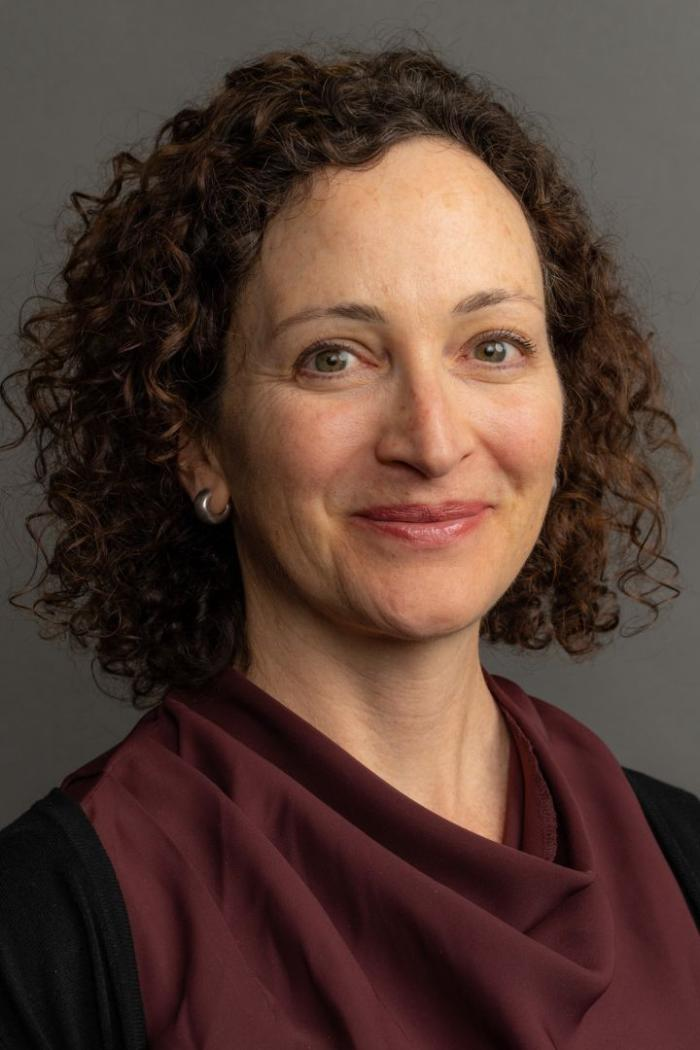
Laura S. Richman, PhD is an Associate Professor of Social Science and Health Law at The George Washington University Law School and teaches interdisciplinary courses and seminars such as Science, Law and Policy, Legal Epidemiology, and Public Health Law, Ethics, and Policy.
Recommended Citation
Laura S. Richman, Medina v. Planned Parenthood South Atlantic: Another Setback to Patients’ Rights and Healthcare Access for Vulnerable Populations, Geo. Wash. L. Rev. On the Docket (July 22, 2025), https://www.gwlr.org/medina-another-setback-to-patients-rights-and-healthcare-access.